Why the Exact Same Outdoor Workout Feels So Much Harder on Humid Days
Quick Answer: Sweat cools the body by evaporating, and high humidity slows evaporation significantly — so on humid days, sweat production stays the same or increases but its actual cooling effect drops sharply, forcing the body to work harder to manage heat even at an identical temperature and pace to a dry day.
It’s not in your head and it’s not a fitness regression — humidity genuinely changes the physics of how your body sheds heat during exercise.

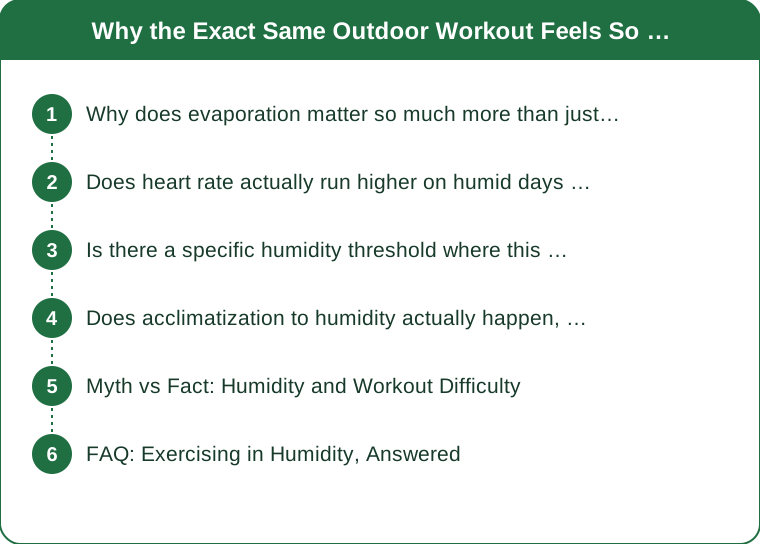
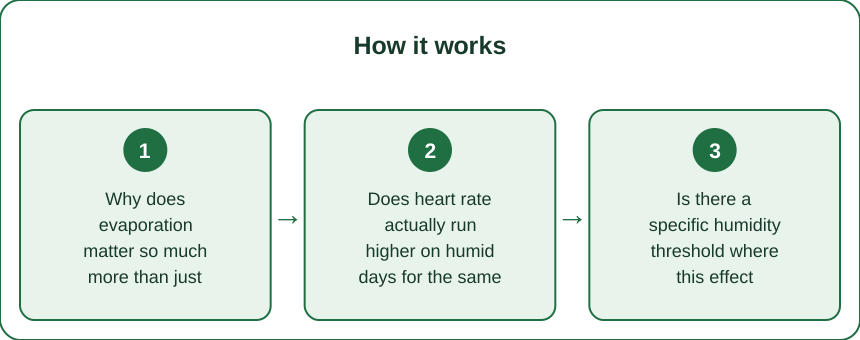
Why does evaporation matter so much more than just how much you’re sweating?
Cooling comes from sweat evaporating off the skin, not from sweat simply being produced — in high humidity, the air is already closer to saturated with water vapor, which slows the rate sweat can evaporate, meaning the same sweat volume produces meaningfully less actual cooling than it would in drier air.
Does heart rate actually run higher on humid days for the same workout?
Yes, measurably — because the body has to work harder to manage heat when evaporative cooling is impaired, heart rate at a given pace typically runs several beats per minute higher on humid days compared to dry days at the same temperature, which is a well-documented and consistent finding in exercise physiology research.
Is there a specific humidity threshold where this effect becomes especially noticeable?
Many exercise physiologists point to roughly 60% relative humidity and above as the range where evaporative cooling becomes meaningfully impaired for most people, with the effect becoming progressively more pronounced as humidity climbs higher, particularly when combined with temperatures above about 75°F (24°C).

Does acclimatization to humidity actually happen, or does every humid day feel equally hard?
Genuine heat and humidity acclimatization does occur with repeated exposure, typically over 1-2 weeks of consistent training in humid conditions — the body increases sweat rate efficiency and blood plasma volume in ways that partially offset the impaired evaporative cooling, though it doesn’t fully eliminate the effect.
Myth vs Fact: Humidity and Workout Difficulty
Myth: A 90°F dry day and a 90°F humid day are equally hard. Fact: the humid day is measurably harder on the cardiovascular system due to impaired evaporative cooling, even at the identical air temperature.
Myth: Drinking more water solves the humidity difficulty. Fact: hydration matters, but it doesn’t address the core evaporation problem — the sweat is still there, it’s the cooling from evaporation that’s impaired, not the fluid supply.
Myth: Feeling harder on humid days means your fitness has declined. Fact: it reflects a genuine physiological difference in heat dissipation for that specific day’s conditions, not an actual fitness regression.
FAQ: Exercising in Humidity, Answered
Should pace be adjusted on humid days compared to dry days at the same temperature?
Many coaches recommend slowing target pace somewhat on high-humidity days specifically, since heart rate and perceived effort run higher at the same pace, making a straight pace comparison across humidity levels less meaningful.
Does wearing lighter or more breathable clothing meaningfully help in humidity?
Yes, to a degree — moisture-wicking, breathable fabric helps sweat spread thinly across a larger surface area, which somewhat improves evaporation efficiency compared to fabric that traps sweat against the skin, though it doesn’t eliminate the underlying humidity effect.
Is early morning genuinely cooler and less humid, or does that vary?
It varies by location and season, but in many climates relative humidity is actually highest in early morning even when temperature is lower — checking both temperature and humidity forecasts, not just temperature, gives a more accurate sense of which time of day will feel easiest.
TL;DR:
- Evaporative cooling, not sweat volume, is what humidity actually impairs
- Heart rate runs measurably higher on humid days at the same pace and temperature
- Roughly 60%+ relative humidity is where the effect becomes especially noticeable
- Genuine acclimatization occurs over 1-2 weeks but doesn’t fully eliminate the effect
The harder feeling on humid days is real physiology, not a fitness regression or a bad day.
Keep Reading
This article is for general informational and styling purposes only. Fit, sizing, and product availability may vary.