Why the First Cool Outdoor Session Feels Harder Than It Should
Quick Answer: The first cool sessions feel hard because your body is still configured for heat — blood volume is elevated, sweat response is primed, and breathing cool dry air irritates the airways until they adapt. It takes roughly one to two weeks to re-acclimatise. Warm up for twice as long, cover the mouth for the first few minutes, and expect the pace to feel wrong before it feels good.
Cool weather is genuinely better for performance. Getting there takes a fortnight.

Why does heat acclimatisation work against you?
Summer training expands plasma volume. Heat acclimatisation increases blood plasma by 10-15%, which is a genuine performance adaptation in the heat. In cool weather that extra volume does not help and the body begins reversing it within days.
Sweat response is still set for summer. An acclimatised body starts sweating earlier and at a higher rate. In 12C air, that means you get wet fast and then get cold, which is the classic miserable first autumn run.
Vasodilation is still the default. Blood vessels near the skin remain more dilated for a while, which loses heat quickly once the ambient temperature drops.
De-acclimatisation takes one to two weeks and is largely complete within three. The awkward window is short but genuinely uncomfortable.
Meanwhile the actual benefits of cool weather are real: less cardiovascular strain for the same pace, better heat dissipation, and typically faster times once you are adapted.
Why does breathing feel worse?
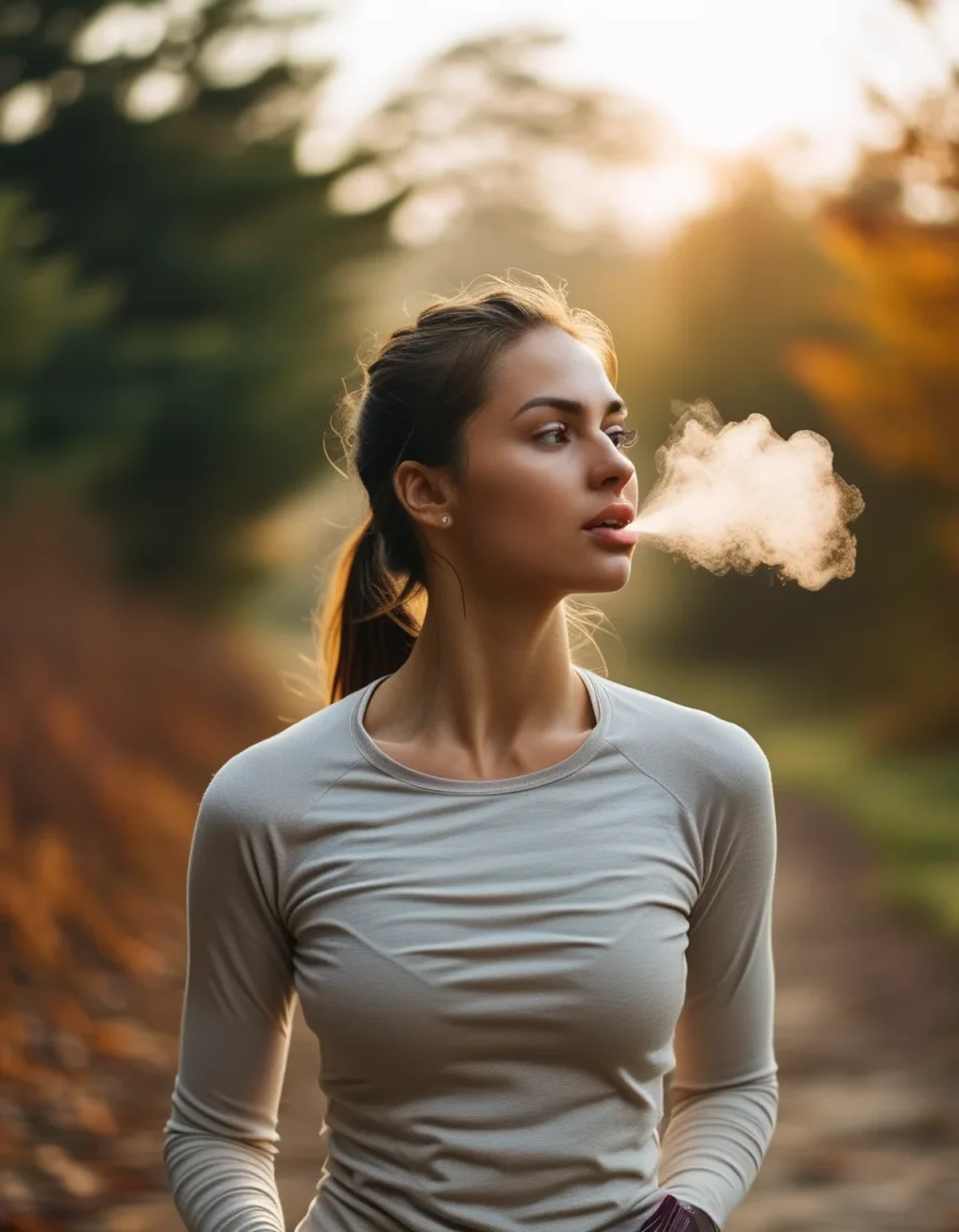
Cool air is dry air. Cold air holds less moisture, and your airways have to humidify every breath. At high ventilation rates, that dries and cools the airway lining, which triggers narrowing in many people.
Exercise-induced bronchoconstriction is common and underdiagnosed. Somewhere around 10% of the general population and considerably more among endurance athletes experience it, and cool dry air is the classic trigger. It typically shows up as a cough, chest tightness, or unexpected breathlessness starting a few minutes into a session.
A longer warm-up genuinely helps. Fifteen minutes of gradually increasing effort produces a refractory period that reduces airway narrowing for the following hour or so.
Breathing through a buff or a light neck gaiter for the first ten minutes warms and humidifies incoming air, and it is the single most effective simple intervention.
When to get it checked: persistent coughing after sessions, wheezing, or breathlessness disproportionate to the effort deserves a proper assessment rather than a workaround. This is general information, not medical advice.
5 mistakes people make in the first cool weeks
1. Dressing for the temperature at the start. You will be roughly 8-10C warmer within fifteen minutes. Leaving the house feeling slightly too cold is correct; leaving comfortable means being overheated and sweat-soaked shortly after.
2. Skipping the warm-up because it is not hot. The opposite is required. Cool tissue needs longer, and the airways need the gradual ramp too. Double the summer warm-up.
3. Drinking less. Thirst drops markedly in cool weather while fluid loss barely does — respiratory water loss actually increases in dry air. Dehydration in autumn is common precisely because nobody feels thirsty.
4. Judging fitness by pace in week one. Pace in the transition fortnight tells you about acclimatisation, not fitness. Comparing a 12C September run to an August one and concluding you have lost fitness is the most common and least accurate autumn conclusion.
5. Stopping to stretch outdoors afterwards. Body temperature drops fast once you stop moving in cool air, and a stationary ten minutes in sweat-soaked kit is how a good session becomes a cold evening. The third mistake — under-drinking — is the one that quietly ruins the most sessions, but this one is the one people notice.
How should the first two weeks be structured?
Reduce intensity, keep frequency. Adaptation happens through exposure. Four easy cool-weather sessions do more than two hard ones.
Warm up indoors where possible. Ten minutes of movement before stepping out means the airways and tissue meet the cold already warm.
Layer to remove. A light long-sleeve over a short-sleeve, so the first layer comes off at the ten-minute mark and goes back on at the end.
Bring a dry top for afterwards. The single biggest comfort upgrade for autumn outdoor training, and the one that keeps people doing it into October.
Expect the switch around day ten. For most people there is a fairly identifiable session where cool air suddenly feels like an advantage rather than an obstacle. That is the acclimatisation completing, and after it, autumn is the best training season of the year.
TL;DR:
- Your body is still configured for heat — expanded plasma volume, early sweating, dilated vessels — and takes one to two weeks to reverse it.
- Cool dry air irritates the airways; a fifteen-minute warm-up and a buff over the mouth for the first ten minutes both help.
- Dress to feel slightly too cold at the door, because you will warm 8-10C within fifteen minutes.
- Keep drinking — thirst drops in cool weather but fluid loss does not.
- Judge fitness after the transition fortnight, not during it.
The first two weeks are the toll. Autumn is the best training weather of the year on the other side of it.
Keep Reading
This article is for general informational and styling purposes only. Fit, sizing, and product availability may vary.