Why the First Cold Outdoor Session Makes Your Chest Feel Tight
Quick Answer: Cold air is also dry air, and the airways lose both heat and moisture warming it. That water loss triggers airway narrowing and irritation - the medical term is exercise-induced bronchoconstriction, and it is far more common in cold weather. The sensation is a tight, burning chest and a cough afterwards. Most people adapt within a couple of weeks. What helps: a longer warm-up, breathing through a buff or scarf to pre-warm and humidify the air, and nasal breathing early in the session. What is not normal: chest pain, severe breathlessness out of proportion to the effort, or symptoms that persist at rest.
The first genuinely cold morning of the year, you go out for the same run you have done all summer, and by ten minutes in your chest is burning and tight and you are coughing.
This is one of the most common autumn complaints in outdoor training and it has a straightforward physiological explanation.
It is also worth knowing where the line is between the ordinary version and the one that needs attention.
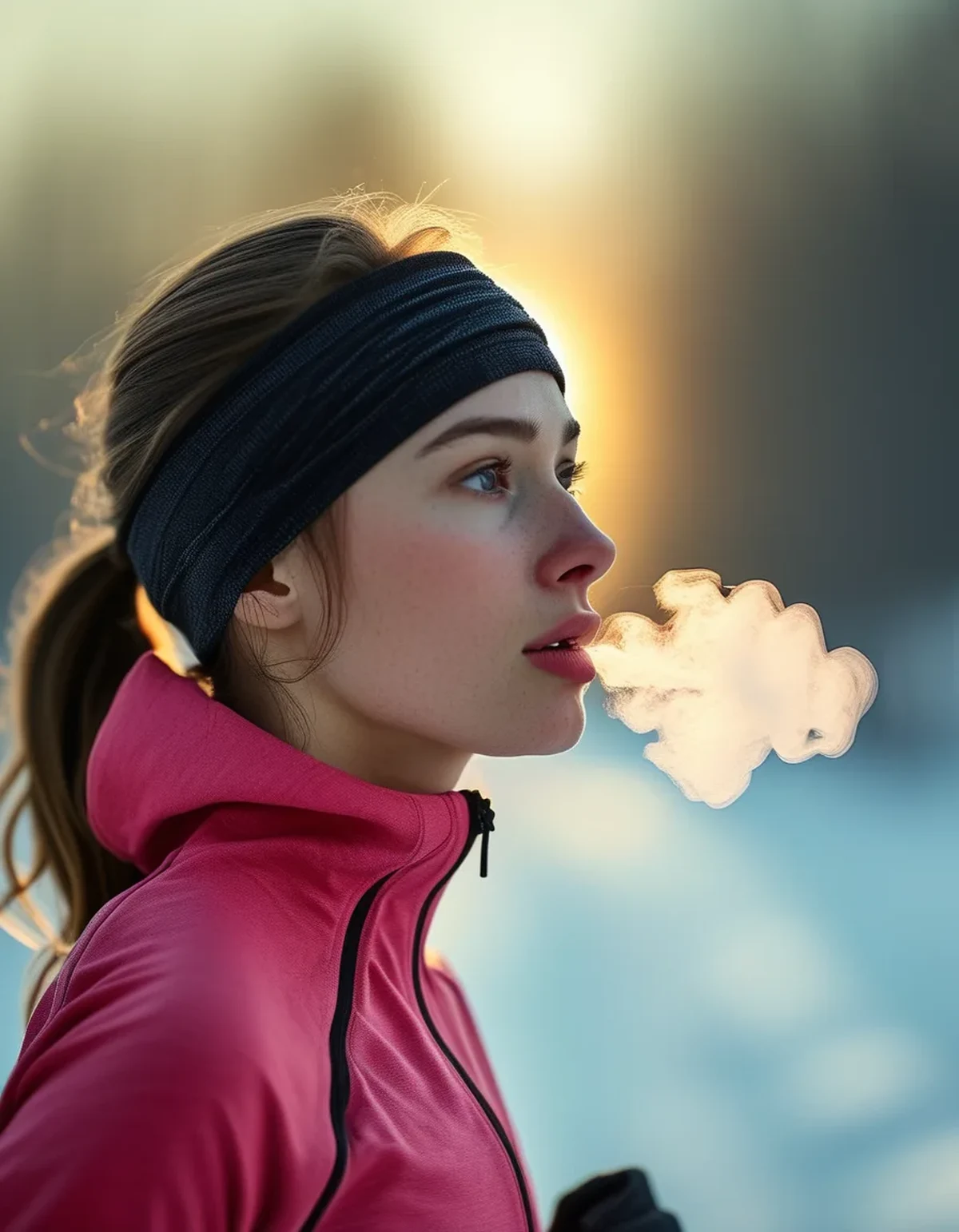
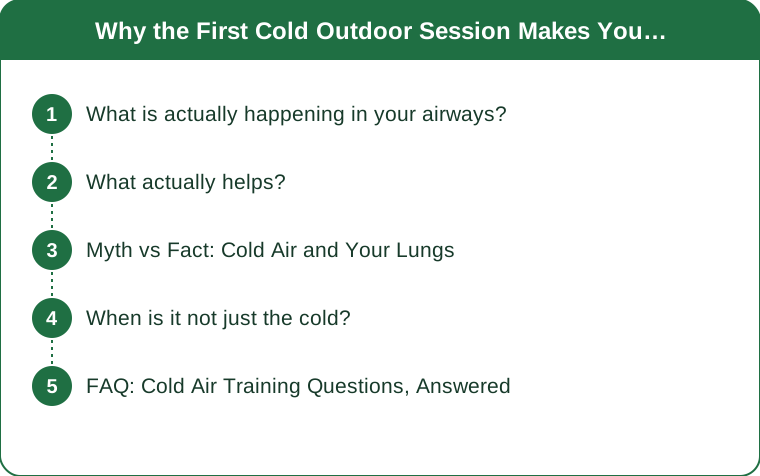
What is actually happening in your airways?
The airways are losing water, not just getting cold - and the water loss is what causes the problem.
Air entering your lungs has to be warmed to body temperature and fully humidified before it reaches the alveoli. Your upper airways do this job, and they use their own heat and moisture to do it.
Cold air holds very little water. Air at 0°C can hold a fraction of the moisture that air at 25°C can, even at the same relative humidity. So cold air is always dry air in absolute terms, and warming it in your airways means giving up a large amount of water.
During exercise, ventilation rises enormously - from around 6 litres per minute at rest to 60-150 during hard effort. That is ten to twenty times more air to warm and humidify, and the airways cannot keep up.
The result is airway surface dehydration. The fluid lining the airways becomes concentrated, which triggers the release of inflammatory mediators from cells in the airway wall. Those mediators cause the smooth muscle around the airways to contract - bronchoconstriction - and the tissue to become irritated.
That is the burning and the tightness. It is not the cold damaging your lungs, which is a common fear and is not what happens - air is fully warmed before it reaches the delicate parts of the lung.
Two other things contribute: mouth breathing bypasses the nose, which is far better at warming and humidifying air than the mouth is. And the cough afterwards is the airways responding to the irritation, which is why it often appears after you stop rather than during.
And this is why it hits on the first cold day specifically. There is a genuine adaptation over a couple of weeks, and you have not had it yet.
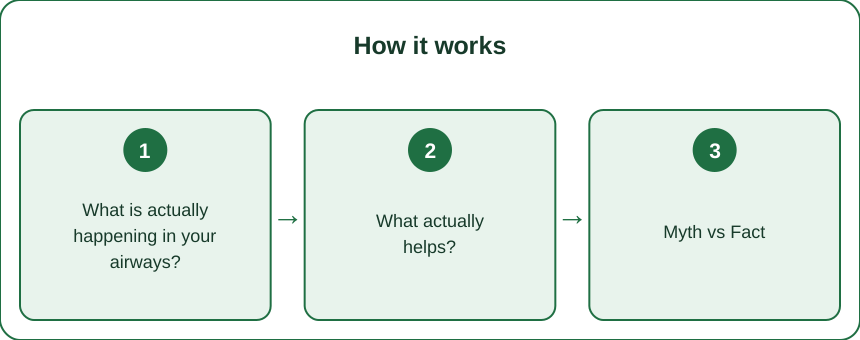
What actually helps?
Warm up longer, cover your mouth, and start through your nose.
Extend the warm-up considerably. Ten to fifteen minutes of gradually increasing effort before anything hard. This is the single most effective intervention - it lets ventilation rise gradually rather than jumping, and it gives the airways time to adjust. Going straight into a hard effort on cold air is the reliable way to trigger the worst version.
Breathe through a buff, scarf or mask over the mouth and nose. This works genuinely well and the mechanism is straightforward: your exhaled breath is warm and saturated, and the fabric traps some of that heat and moisture, which pre-conditions the next breath in. A simple buff can raise inspired air temperature substantially, and it is the cheapest effective solution available.
Nasal breathing early in the session. The nose is considerably better at warming and humidifying than the mouth. You cannot maintain it at high intensity, but using it during the warm-up and easy sections reduces total airway water loss across the session.
Build intensity gradually across the whole session rather than doing intervals early.
Stay hydrated. Airway surface hydration depends on systemic hydration, and people drink less in cold weather.
Cool down gradually rather than stopping abruptly. The post-exercise cough is often worst after a sudden stop.
And expect it to improve. Most people adapt over one to two weeks of regular cold exposure - the airways become more tolerant, and the same conditions stop producing the same response. The first cold session of the year is usually the worst one.
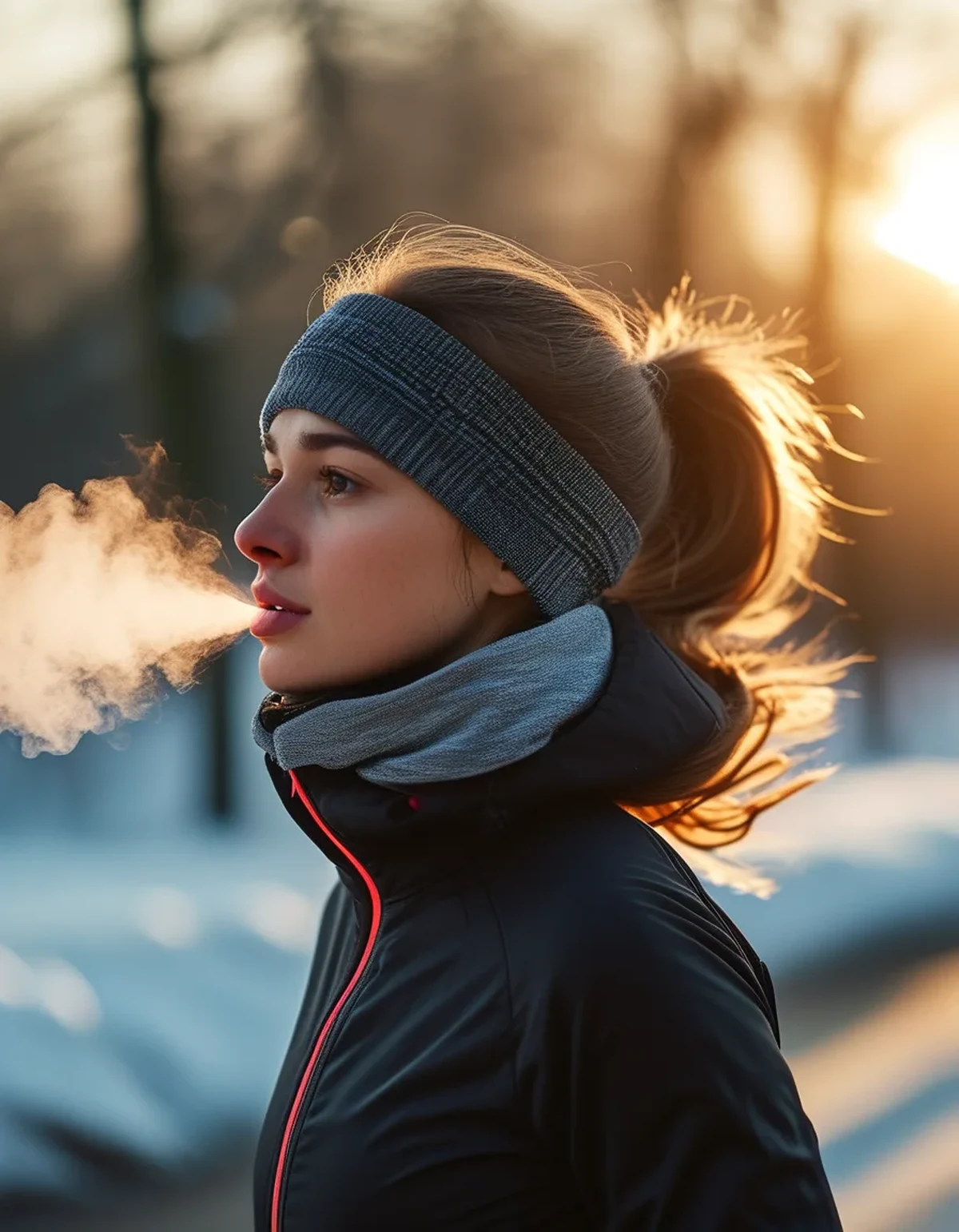
Myth vs Fact: Cold Air and Your Lungs
Myth: Cold air damages your lungs. Fact: Air is fully warmed to body temperature before reaching the alveoli, even in extreme cold. The irritation is in the upper and mid airways and it is about water loss rather than temperature damage. Uncomfortable, not harmful, for the great majority of people.
Myth: The burning means you are unfit. Fact: It correlates with ventilation rate, so fitter athletes moving more air can experience it more strongly, not less. Elite endurance athletes have notably high rates of exercise-induced bronchoconstriction, particularly in winter sports.
Myth: You should breathe only through your nose in the cold. Fact: Nasal breathing is genuinely better for conditioning the air, and it is not possible to maintain at moderate or high intensity - nasal airflow simply cannot supply enough. Use it during the warm-up and easy portions and do not fight it when you need more air.
Myth: A scarf over your face is just for warmth. Fact: It is doing real physiological work by trapping exhaled heat and moisture to pre-condition the incoming air. This is a well-supported intervention rather than a comfort measure.
Myth: If it happens, you should stop exercising outdoors in winter. Fact: Most people adapt within a couple of weeks, and the strategies above work well. For people whose symptoms are significant or persistent, there are effective medical treatments - so it is a reason to get assessed rather than to give up outdoor training.
Myth: It only happens below freezing. Fact: Symptoms commonly appear well above freezing, particularly on dry, windy days. Absolute humidity matters more than temperature - a dry 8°C morning can provoke more than a damp 2°C one.
When is it not just the cold?
There is a clear line, and it is worth knowing rather than guessing.
The ordinary pattern: tightness and burning that builds during exercise in cold air, a cough afterwards lasting minutes to an hour, and full resolution with rest. It improves over a couple of weeks of regular exposure and responds to warming up and covering the mouth.
Get it assessed if:
Symptoms happen at rest, not just during exercise. Exercise-induced bronchoconstriction is exercise-induced; breathlessness or wheeze while sitting still is a different picture.
Breathlessness is out of proportion to the effort, or you cannot complete sessions you could complete before.
There is actual chest pain rather than a burning sensation - particularly pressure, tightness radiating to the arm, jaw or back, or pain with nausea or sweating. That needs urgent medical attention, not a training adjustment.
Wheeze is audible, or you are coughing for hours afterwards.
Symptoms do not improve over two to three weeks of adaptation and sensible management.
You have a history of asthma or allergy. Cold air is a well-recognised trigger, and if you have a diagnosis, this is a conversation about whether your management needs adjusting for the season rather than something to work around.
A practical note on the season: autumn also brings mould spores from leaf litter, the start of the respiratory infection season, and in some areas increased particulate pollution from heating. Any of those can produce similar symptoms, so a chest that is unhappy in October is not automatically about cold air.
This is general information, not medical advice. Chest pain, significant breathlessness, or symptoms at rest need medical assessment - urgently in the case of chest pain.
FAQ: Cold Air Training Questions, Answered
How cold is too cold to train outdoors?
For most healthy people there is no strict cut-off, and the practical limits come from ice underfoot and frostbite risk rather than from the lungs. Around -20°C some organisations restrict competition, but that is well beyond most conditions. What matters more than the number is warming up properly, covering your mouth, and building intensity gradually.
Does a mask or buff actually work?
Yes, and this is well-supported. Your exhaled breath is warm and fully saturated, and a layer of fabric over the mouth and nose traps some of that heat and moisture so the next breath in is warmer and wetter. It is the most effective simple intervention available and it costs almost nothing.
Why does the cough come after I stop rather than during?
Because the airway narrowing typically peaks a few minutes after exercise ends rather than during it - the inflammatory mediators released during the session continue to act as ventilation drops. A gradual cool-down rather than an abrupt stop reduces it noticeably, as does covering your mouth on the walk home.
TL;DR:
- Cold air is dry air. Warming and humidifying it during hard breathing dehydrates the airway surface, which triggers narrowing and irritation.
- It is not lung damage - air is fully warmed before reaching the alveoli. It is upper-airway water loss.
- Fitter people can get it more, not less, because they move more air.
- What works: a 10-15 minute warm-up, a buff or scarf over the mouth (it traps your own exhaled heat and moisture), and nasal breathing early.
- Most people adapt in one to two weeks - the first cold session is usually the worst.
- Chest pain, symptoms at rest, or breathlessness out of proportion to effort are not this and need assessing.
Absolute humidity matters more than the thermometer - a dry 8°C morning can provoke more than a damp 2°C one.
Keep Reading
This article is for general informational and styling purposes only. Fit, sizing, and product availability may vary.