What Morning Fog Actually Means for an Outdoor Workout
Quick Answer: Fog itself is just suspended water and is harmless to breathe. The problem is that the same conditions that create fog — still air and a temperature inversion — also trap pollution near the ground, so a foggy morning frequently has worse air quality than a clear one. Check the actual reading rather than the view. Fog also cuts visibility to the point where being seen becomes the larger risk for anyone near traffic.
Fog reads as clean. It looks like the countryside in a photograph, everything is quiet, and the air feels fresh and cool.
The meteorology says something different, and it is worth understanding before the foggy season properly arrives.

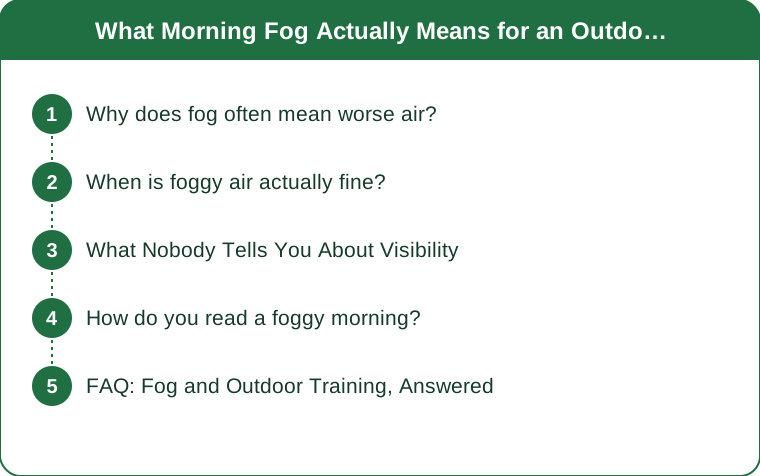
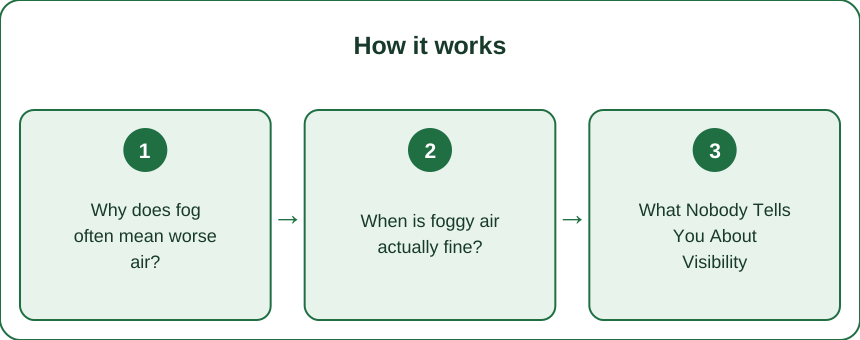
Why does fog often mean worse air?
Because fog and trapped pollution are produced by the same atmospheric condition.
Normally, air temperature falls with altitude, so warm air near the ground rises and carries pollutants up and away. This is the vertical mixing that keeps ground-level air reasonable.
A temperature inversion reverses it. On a clear, still night, the ground radiates heat away and cools quickly, chilling the air directly above it. You end up with cold air at the surface and warmer air above — a lid. Cold dense air cannot rise through warm air, so vertical mixing stops.
Two things then happen simultaneously. The cooled surface air reaches its dew point and water condenses into fog. And everything emitted at ground level — vehicle exhaust, wood smoke, particulates — stays there, accumulating beneath the lid.
So fog is not causing the pollution; it is a visible marker of the conditions that concentrate it. This is why the historically severe urban smog episodes were fog events, and why air quality readings in valleys and basins spike on calm, foggy autumn and winter mornings.
Fog droplets also do something specific: they absorb gases and provide surfaces for chemical reactions, and pollutants dissolved in droplets can be inhaled deeper than as a gas alone.
The seasonal timing matters. Autumn is the beginning of this pattern — long clear nights, cooling ground, still conditions at dawn. Add wood smoke as heating starts, and the calm foggy morning becomes one of the worse air days of the week in many areas.
When is foggy air actually fine?
Often, and the distinction is about location and source rather than about the fog itself.
Genuinely fine:
Rural and coastal fog away from combustion sources. Fog over fields or by the sea with no traffic and no wood burning nearby is essentially clean humid air. Radiation fog in open countryside is one of the more pleasant conditions to run in.
Fog that forms after rain. Rain scavenges particulates out of the air very effectively. Fog forming on a damp morning after overnight rain is usually associated with better air, not worse.
Sea fog moving inland. Advection fog carried off the water brings clean marine air with it, and it can arrive with a breeze — which means mixing is still happening.
Worth checking carefully:
Urban fog on a still morning. The classic inversion case. Traffic emissions accumulating at ground level with no dispersion.
Valley or basin fog. Terrain physically traps the cold layer. Air quality in valleys under inversion can be dramatically worse than a few hundred metres up the hillside.
Fog during wood-burning season. Residential wood smoke is a major particulate source, and it is emitted at exactly the height where an inversion holds it.
The decisive move is to check the number, not the view. An air quality app takes ten seconds. Below AQI 50 is fine for anyone; 50 to 100 is fine for most people but worth moderating intensity if you have asthma or another respiratory condition; above 100 means reducing intensity or moving indoors, especially for hard efforts where you are breathing several times your resting volume.

What Nobody Tells You About Visibility
For most people training near roads, being seen is the larger risk and it gets almost no attention.
Fog reduces visibility non-linearly. Dense fog can drop visibility below 50 metres, which at typical urban driving speeds gives a driver very little time between seeing you and reaching you. On rural roads with higher speeds the margin is worse.
Fog scatters light, which means car headlights illuminate less far and your reflective gear returns less light to the driver. Reflective strips that work well on a clear night are meaningfully less effective in fog.
Active lighting beats reflective in fog. A blinking light — front white, rear red — is emitted rather than reflected, and it penetrates fog far better than any reflective material. If you train near traffic in autumn, a small clip-on light at $15 is the highest-value safety purchase you can make.
Bright colours do not help much. Fog desaturates colour and reduces contrast. High-visibility yellow in fog is far less visible than most people assume, which is why the guidance for low-visibility conditions is lights rather than clothing colour.
Sound is also affected. Fog does not block sound significantly, and it does make direction harder to judge. If you run with headphones near roads, a foggy morning is the one to leave them out.
And the surface risk: fog deposits a thin film of moisture on everything. Painted road markings, metal drain covers, wooden boardwalks and fallen leaves become genuinely slippery. Autumn fog on wet leaves is one of the more common causes of running falls, and the fix is simply shortening your stride slightly and running on the more textured surface where you have a choice.
How do you read a foggy morning?
A short checklist that takes about a minute before you head out.
1. Check the air quality reading. Not the forecast, the current reading, and ideally from a monitor near you rather than a city-wide average. Inversions produce very local variation.
2. Ask where you are. Valley or basin, near a busy road, in an area with wood burning — treat with more caution. Coastal, rural, or after rain — probably fine.
3. Is there any wind at all? Even a light breeze means mixing is happening and pollution is not accumulating. Completely still is the condition that concentrates.
4. Can you smell smoke? A direct and reliable signal. If the morning smells of wood smoke, particulates are elevated regardless of what any general forecast says.
5. Judge your route by visibility. Under about 100 metres and you should not be running on or beside a road without lights. Off-road, a park loop or a trail is a much better choice on a foggy morning, and it also solves the air quality question in most cases.
6. Consider timing. Radiation fog typically burns off within a couple of hours of sunrise as the ground warms and the inversion breaks. Delaying a run by ninety minutes frequently converts a poor morning into a good one — and the air quality improves at the same time as the visibility, since both depend on the inversion breaking.
If you have asthma or another respiratory condition, cold damp air is itself a common trigger independent of pollution, and a foggy autumn morning combines cold, damp and often elevated particulates. Warming up indoors, breathing through a buff or scarf for the first few minutes, and having a plan agreed with your doctor all apply here.
This is general information, not medical advice.
FAQ: Fog and Outdoor Training, Answered
Is breathing fog itself harmful?
No. Fog is condensed water vapour. Cold damp air can trigger airway narrowing in people with asthma, but the water itself is not a pollutant.
Does fog make it harder to breathe during exercise?
Cold air more than fog. High humidity does slightly reduce evaporative cooling, so you may feel warmer at the same effort, and the perception of harder breathing is usually the cold rather than the moisture.
Should I wear a mask?
A standard cloth mask does very little for fine particulates. A properly fitted N95 or FFP2 filters effectively and makes hard exercise noticeably harder. On a genuinely poor air day, reducing intensity or moving indoors is the better answer than masking through it.
Is a treadmill actually better?
On a high-pollution morning, generally yes, if the indoor space is reasonably ventilated. Indoor air is not automatically clean, but it is not sitting under an inversion with traffic emissions.
How do I find local air quality data?
Most weather apps include an AQI figure. Dedicated air quality apps and networks of low-cost sensors give more local readings, which matters a lot during an inversion where conditions vary street to street.
Does fog mean it will be a nice day?
Often, actually — radiation fog forms under clear calm skies, which frequently means a sunny day once it burns off. That is a genuinely reliable piece of weather folklore, and it is also the reason to consider simply waiting.
TL;DR:
- Fog is harmless water, but the temperature inversion that creates it also traps pollution near the ground.
- Rural, coastal and post-rain fog is usually clean. Urban, valley and wood-smoke fog often is not — check the AQI reading, not the view.
- Any wind at all means mixing is happening. Dead still is the concerning condition.
- Lights beat reflective gear in fog, and bright colours help less than you think.
- Radiation fog usually burns off within a couple of hours — delaying often fixes both air and visibility.
The foggy mornings are just starting. A ten-second check of the actual number is the whole habit.
Keep Reading
This article is for general informational and styling purposes only. Fit, sizing, and product availability may vary.