Outdoor Workouts When the Ground Is Wet Every Single Morning
Quick Answer: From early autumn, overnight cooling condenses moisture onto grass, so morning surfaces are wet regardless of rainfall. That changes three things: traction is reduced and inconsistent, feet get wet within minutes in mesh shoes, and cold wet ground makes warm-ups take longer. The practical adjustments are trail or grippier outsoles, water-resistant shoes for grass sessions, a longer warm-up, and moving lateral or high-speed work onto a surface that drains.
It has not rained in three days and the grass is still soaking at seven in the morning.
That is dew, it is going to happen every morning until spring, and it changes what you can do out there.
This is general information, not medical advice.

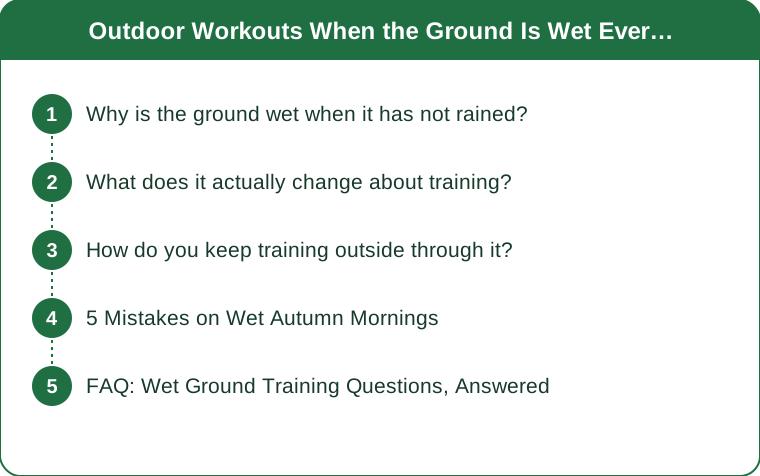
Why is the ground wet when it has not rained?
Because cool nights condense moisture out of the air onto the ground.
Air holds less water vapour as it cools. On a clear night, ground surfaces lose heat by radiating it to the sky and can drop below the dew point of the surrounding air, at which point moisture condenses onto them.
Grass condenses more than hard surfaces, because blades have a large surface area, they radiate heat efficiently, and plants also release moisture from their surfaces overnight.
Which is why the pattern is so specific:
- Clear, still nights produce the heaviest dew - cloud cover reduces radiative cooling
- Grass and vegetation are wet while paths and tarmac may be dry
- It burns off with direct sun and can persist all day in shade
- North-facing ground stays wet substantially longer in autumn
And it starts earlier in the season than most people notice. The first heavy dew mornings typically arrive well before the first frost, and they catch people out because the weather still feels like late summer.
As autumn progresses, the same mechanism produces frost once the surface drops below freezing, which is a much bigger traction change and worth anticipating rather than discovering.
What does it actually change about training?
Traction, footwear and warm-up, in that order of importance.
Traction is reduced and, more importantly, inconsistent. Wet grass provides variable grip depending on the density of the sward, the slope and how compacted the ground is. Variable traction is harder to train on than uniformly low traction, because your movement is calibrated to an expectation that keeps being wrong.
What to change:
- Reduce lateral movement and hard cutting on wet grass. This is the highest-risk category and the easiest to move elsewhere
- Shorten your stride slightly and keep the foot underneath you rather than reaching forward
- Take sprints and change-of-direction work onto a surface that drains - tarmac, a track, or gravel
Footwear matters more than people expect. Mesh running shoes soak through wet grass within minutes, and wet feet in cool weather is the fastest route to an unpleasant session and, over time, to blisters and skin problems.
- A trail outsole with actual lugs grips wet grass far better than a road outsole
- A water-resistant upper is worth having for grass sessions specifically
- Wool or synthetic socks, never cotton - cotton holds water against the skin and stays cold
Warm-up needs more time. Cold ambient temperature plus a cold wet surface means tissue takes longer to reach working temperature, and the surface demands more stabilisation work. The instinct to rush because you are cold is exactly backwards.

How do you keep training outside through it?
Adjust the session and the timing rather than moving indoors.
Move the session later where you can. Dew burns off with direct sun, so a 10am session on an east-facing field can be on dry grass while 7am was soaking. This is the single easiest adjustment and it costs nothing.
Choose surfaces deliberately:
- A tarmac path or track for anything fast or lateral
- Wet grass for steady running, which is genuinely fine and low risk
- Avoid slopes on wet grass - the risk goes up sharply with gradient
- Sand or a well-drained gravel path if available, which handles wet better than either
Restructure the session rather than cancelling it. A wet morning is a good day for steady aerobic work, strength work, or hill walking, and a poor day for sprints, agility and plyometrics. Swapping the session type is a better response than skipping it.
Practical items that make it sustainable:
- Two pairs of shoes in rotation, so one dries fully while the other is used. This becomes essential rather than optional in autumn
- A towel and dry socks in the car or bag
- A mat or a piece of foam for any ground work, since lying on wet cold grass ends sessions early
- Gaiters, if you train regularly on long wet grass - unfashionable and genuinely effective
And on shoe drying: stuff wet shoes with newspaper and dry at room temperature. Direct heat degrades adhesives and midsole foam, and a radiator will shorten the life of a pair noticeably across a wet season.
5 Mistakes on Wet Autumn Mornings
1. Doing sprints or agility work on wet grass. The highest-risk combination available, and the easiest to relocate. Move fast and lateral work onto a surface that drains.
2. Wearing mesh road shoes on grass. They soak through within minutes and offer little grip on wet vegetation. A trail outsole with lugs is a different experience entirely on the same field.
3. Rushing the warm-up because it is cold. Cold plus wet plus unstable is when you need the longest warm-up of the year, not the shortest. Add five minutes rather than removing them.
4. Cotton socks. They hold water against the skin, stay cold, and cause blisters on wet mornings far more readily than dry ones. Wool or synthetic, every time.
5. Drying shoes on a radiator. Direct heat degrades midsole foam and adhesives, and it is a fast way to shorten the life of a pair. Newspaper and room temperature is slower and much better.
A sixth that matters as the mornings get darker: not accounting for reduced visibility on wet ground. Wet grass hides holes, roots and uneven ground, and low autumn sun on a wet surface produces glare that hides them further. Know the ground or slow down.
FAQ: Wet Ground Training Questions, Answered
Why is the grass wet when it did not rain?
Overnight radiative cooling drops the ground below the dew point of the surrounding air, and moisture condenses onto it. Clear still nights produce the heaviest dew, and grass condenses far more than hard surfaces do.
Are trail shoes necessary for wet grass?
Not necessary and genuinely better - a lugged outsole grips wet vegetation far more securely than a road outsole. If you train on grass regularly through autumn, it is one of the more worthwhile purchases.
Should I move my workout indoors?
Usually not. Change the session type rather than the location - steady aerobic work and strength work are fine on wet ground, while sprints and agility should move to a draining surface.
Is wet grass actually dangerous?
More risky than dry, particularly for lateral movement, cutting and anything on a slope. Steady running on flat wet grass is low risk. The danger is doing dry-ground movements on a wet surface.
How do I dry my shoes properly?
Remove the insoles, stuff with newspaper, and dry at room temperature away from direct heat. Radiators and heaters degrade midsole foam and adhesives, which shortens the life of the shoe considerably.
When does dew turn into frost?
Once surface temperature drops below freezing, which usually starts several weeks after the first heavy dew mornings. Frost is a much bigger traction change and worth anticipating - it looks similar and behaves very differently.
TL;DR:
- Autumn dew wets grass every clear morning regardless of rainfall, and it starts before the weather feels autumnal
- Traction becomes variable rather than just lower, which is the harder problem
- Move sprints, cutting and agility onto a surface that drains; steady running on wet grass is fine
- Trail outsoles grip wet vegetation far better than road outsoles
- Wool or synthetic socks, never cotton, and two pairs of shoes in rotation
- Warm up longer, not shorter - cold, wet and unstable is the worst combination for rushing
- Dry shoes with newspaper at room temperature, never on a radiator
The field is going to be wet until spring. Change the session, not the location.
Keep Reading
This article is for general informational and styling purposes only. Fit, sizing, and product availability may vary.