Solo Outdoor Workout Safety Tips That Go Beyond 'Tell Someone Your Route'
Quick Answer: Beyond sharing your route, varying your regular workout times and paths (rather than following a predictable pattern), carrying a phone with location sharing actively enabled rather than just installed, and choosing routes with reasonable visibility and foot traffic over more isolated ‘scenic’ alternatives meaningfully reduce risk in ways that route-sharing alone doesn’t address.
Most solo outdoor safety advice stops at one tip, but a genuinely safer routine layers several habits together rather than relying on a single precaution.
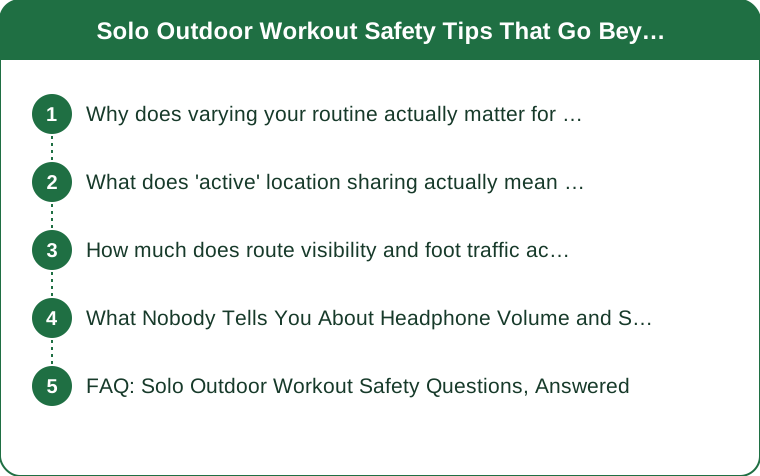
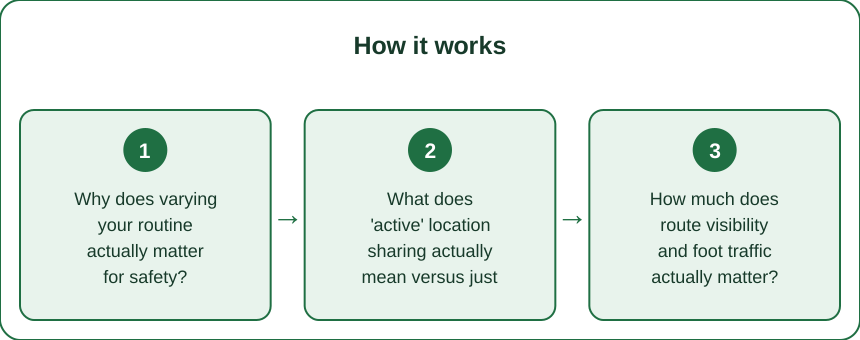
Why does varying your routine actually matter for safety?
A highly predictable pattern (same route, same time, every single day) is something anyone paying casual attention could learn and anticipate, while genuinely varying the time of day, direction, or specific route reduces that predictability — this is a often-overlooked layer beyond simply telling someone your plan once.
What does ‘active’ location sharing actually mean versus just having the feature?
Many phones have location sharing capability that isn’t actually turned on or being used in real time — confirming that a trusted contact can see your live location during the specific window of your workout (not just that the app exists on your phone) is the difference between a real safety measure and a false sense of one.
How much does route visibility and foot traffic actually matter?
Routes with reasonable natural surveillance (other people present, visibility from nearby streets or buildings, decent lighting if applicable) are measurably safer than isolated, secluded paths regardless of how scenic the secluded option looks — this is one of the more significant, evidence-supported factors in outdoor safety research.
What Nobody Tells You About Headphone Volume and Situational Awareness
Running with headphones at a volume that blocks out ambient environmental sound (approaching vehicles, other people, changing conditions) measurably reduces situational awareness — keeping volume low enough to still hear your surroundings, or using bone-conduction headphones that don’t block the ear canal, preserves both music and awareness.
FAQ: Solo Outdoor Workout Safety Questions, Answered
Is carrying a personal safety device actually worth it?
For many people, yes — a small personal alarm or a safety app with a one-touch emergency alert adds a genuine additional layer, though it works best as a supplement to the awareness and routing habits above, not a replacement for them.
Does time of day matter as much as people say?
Generally yes — well-lit times with more ambient foot or vehicle traffic are measurably safer than very early morning or late evening in secluded areas, though this varies significantly by specific location and neighborhood.
Is it overly cautious to change up routes regularly just for safety?
No — beyond the safety benefit, route variation also tends to keep outdoor workouts more mentally engaging over time, so it’s a habit with more than one practical upside.
TL;DR:
- Varying routine timing and routes reduces predictability beyond a single shared route
- Confirm location sharing is actively on during the workout, not just installed as a feature
- Routes with visibility and foot traffic are measurably safer than isolated, scenic alternatives
- Headphone volume that blocks ambient sound reduces situational awareness meaningfully
Layering several habits together, rather than relying on one tip, is what actually moves the needle on solo outdoor workout safety.
Keep Reading
This article is for general informational and styling purposes only. Fit, sizing, and product availability may vary.