Why Outdoor Workouts Might Be Fixing Your Sleep (Even Short Ones)
Quick Answer: Outdoor workouts help sleep mainly through morning light exposure, which anchors your circadian rhythm — even 10-20 minutes of outdoor movement within 2 hours of waking can improve sleep onset that same night.
You’ve tried a magnesium supplement, a cooler bedroom, a wind-down routine. The variable most people skip is what happens 12 hours earlier: whether your eyes saw real daylight.

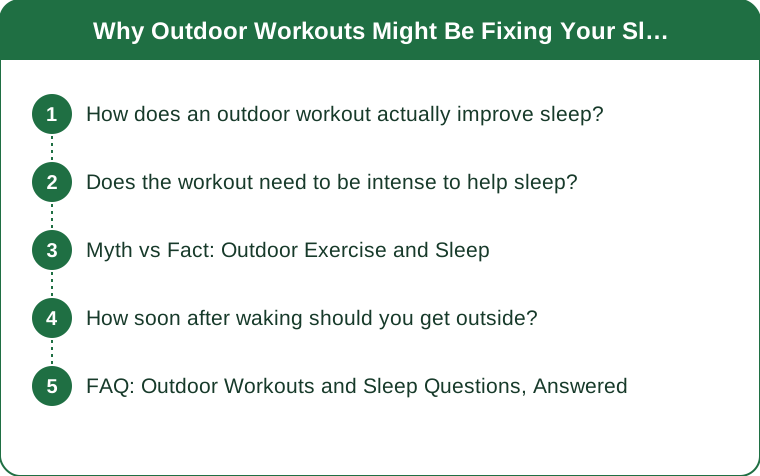
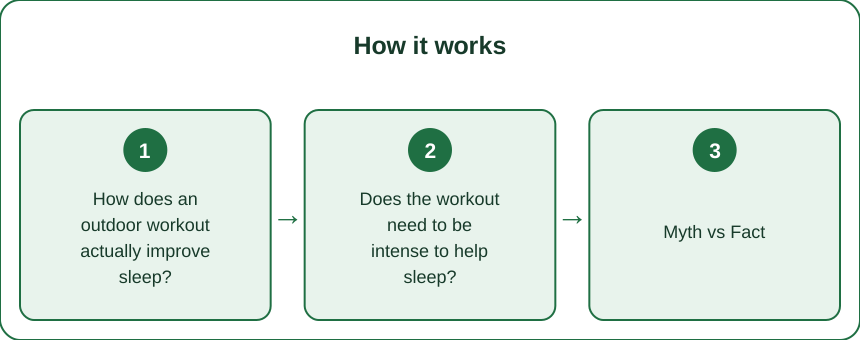
How does an outdoor workout actually improve sleep?
Through light-driven circadian anchoring, not just the exercise itself. Morning outdoor light — even on a cloudy day — is many times brighter than typical indoor lighting, and that brightness is what tells your internal clock when ‘day’ started.
A clearly anchored morning signal makes your body’s evening melatonin release happen on a more predictable schedule, which is a bigger sleep-onset lever than most indoor workout timing changes.
Does the workout need to be intense to help sleep?
No — a brisk 15-20 minute outdoor walk delivers most of the light-exposure benefit. Intensity affects fitness gains, not this particular sleep mechanism, which is driven by light hitting your eyes, not heart rate.
That said, combining outdoor light exposure with real exercise (not just standing outside) adds a second, independent sleep benefit: exercise itself improves slow-wave sleep, especially when done earlier in the day.

Myth vs Fact: Outdoor Exercise and Sleep
Myth: Evening outdoor workouts help sleep the same way morning ones do. Fact: Evening light exposure can actually delay your circadian rhythm rather than anchor it — morning light is the specific lever for sleep-onset improvement.
Myth: You need direct sun, so cloudy days don’t count. Fact: Overcast outdoor light is still roughly 10x brighter than typical indoor lighting — cloudy-day outdoor time still beats an indoor gym session for this purpose.
How soon after waking should you get outside?
Within the first 1-2 hours for the strongest circadian effect. Light exposure later in the day still helps general alertness, but the sleep-onset benefit is specifically tied to morning timing.
If a full outdoor workout isn’t realistic that early, even a 10-minute outdoor coffee or a short walk before an indoor session captures most of the light benefit.
FAQ: Outdoor Workouts and Sleep Questions, Answered
How long does it take to notice a sleep improvement?
Some people notice easier sleep onset within a few days of consistent morning outdoor light; more measurable changes in sleep quality typically show up over 2-3 weeks.
Does this work in winter with less daylight?
Yes, though you may need slightly longer exposure (20-30 minutes) since winter light is dimmer even during daytime hours.
Can indoor bright-light therapy substitute for outdoor time?
Partially — a proper 10,000 lux light therapy lamp can approximate outdoor brightness, but real outdoor light remains the simpler, free option when available.
TL;DR:
- Morning outdoor light anchors your circadian rhythm, improving sleep onset that night
- 10-20 minutes within 2 hours of waking captures most of the benefit
- Evening outdoor workouts don’t have the same effect — timing matters
- Cloudy days still work — overcast light is far brighter than indoor lighting
Move one workout outside and to the morning this week, even a short one, and give it 2-3 weeks before judging your sleep.
Keep Reading
This article is for general informational and styling purposes only. Fit, sizing, and product availability may vary.