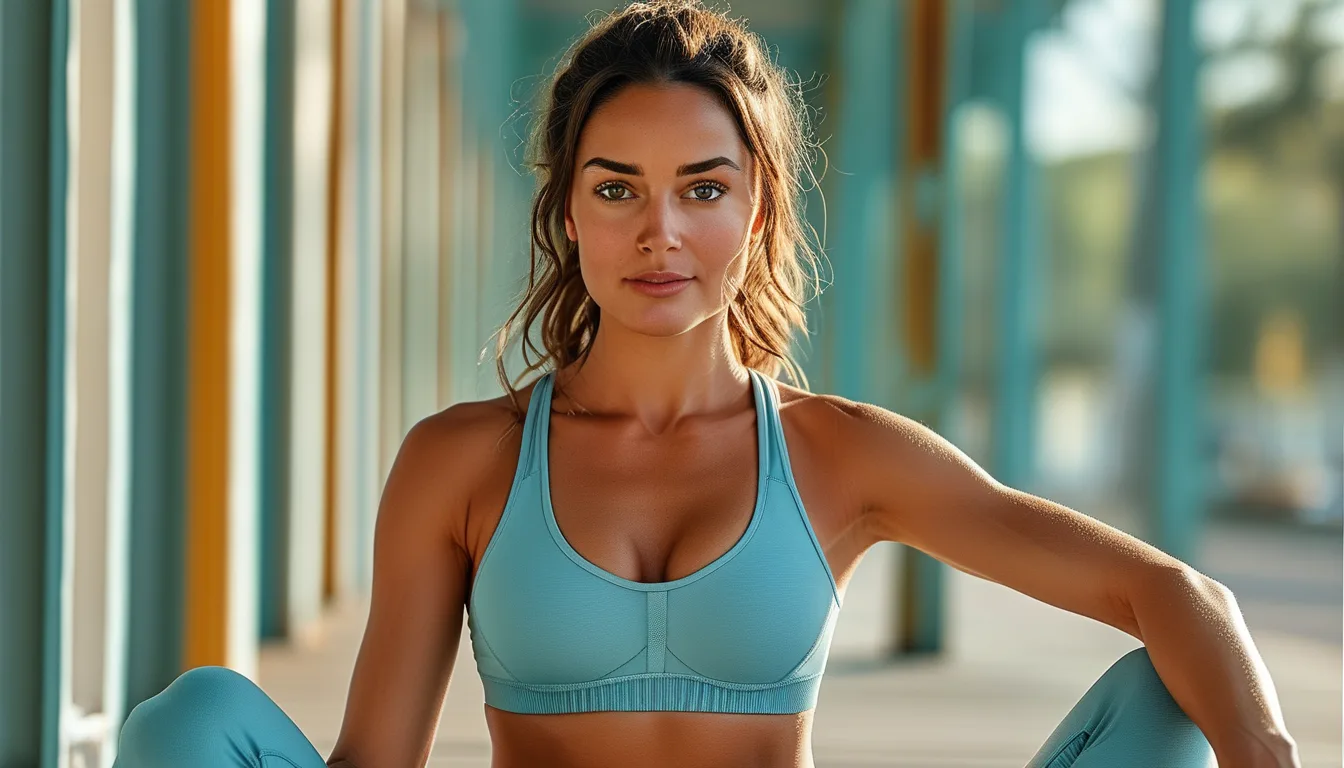
Why You Overdress for the First Cool Workout Every Single Year
Quick Answer: Your heat tolerance recalibrates over about two weeks of summer, so the first cool morning feels far colder than the same temperature will in November. The reliable rule is to dress for about 15–20°F warmer than the actual temperature — you should feel slightly cold for the first five minutes. Overdressing causes sweat, which then makes you genuinely cold when you slow down.
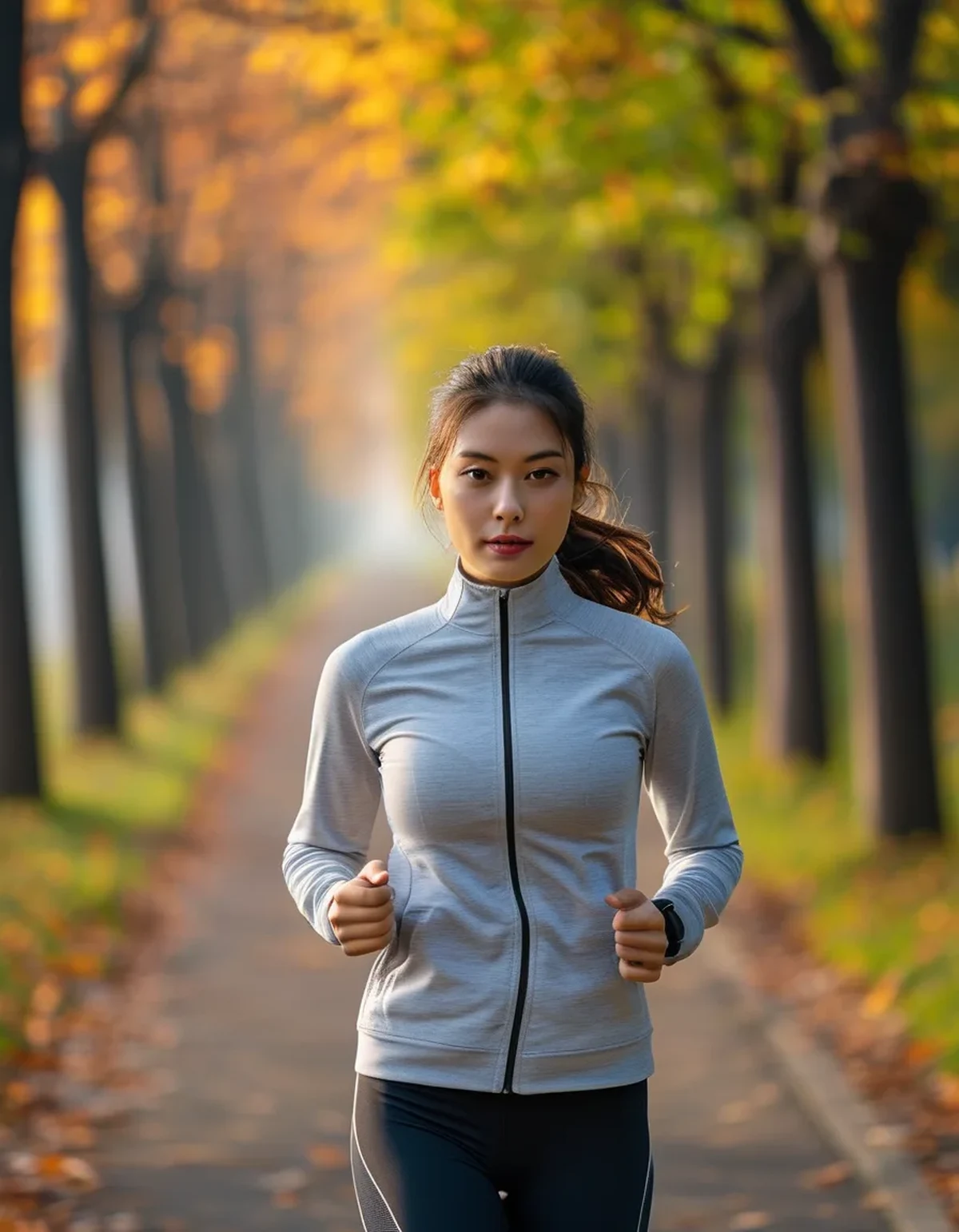
Every year, the same thing. The first properly cool morning arrives, you put on the jacket, and by mile two you are carrying it.
This is not poor judgment. It is a real physiological adjustment that takes two to three weeks, and there is a workaround.
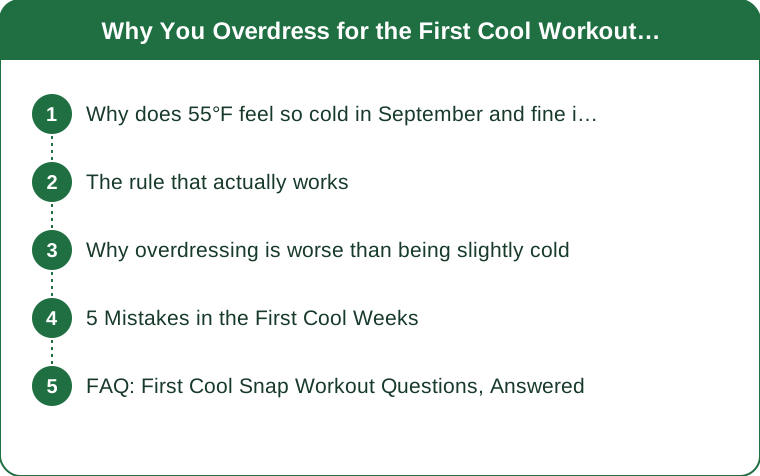
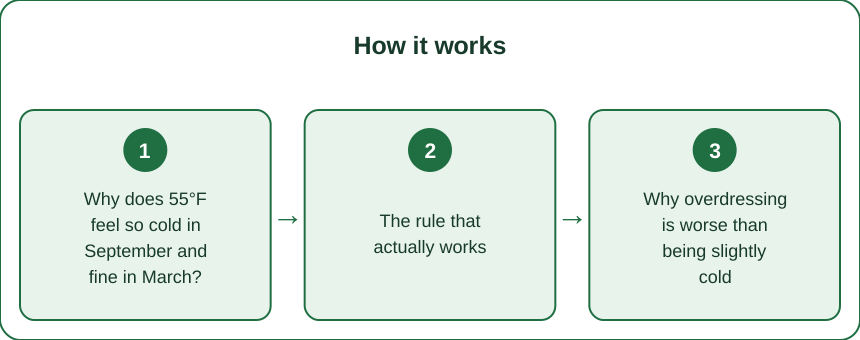
Why does 55°F feel so cold in September and fine in March?
Because heat acclimatization is real, it takes weeks to build, and it takes weeks to lose.
Over a summer of exercising in heat, your body makes a set of adaptations: you begin sweating earlier and more, your sweat becomes more dilute, your plasma volume expands, and your skin blood flow increases. These changes are excellent for handling heat and they leave you calibrated for it.
When the temperature drops 20 degrees over a week, none of those adaptations reverse immediately. You are still sweating readily, still moving blood to the skin, and still subjectively expecting warmth. Fifty-five degrees against that baseline feels genuinely cold.
By November, after weeks of cool exposure, the same 55°F feels mild — and by March, after a winter of it, 55°F feels warm enough to run in shorts.
This is why the same person dresses completely differently for identical temperatures six months apart, and both times feels correct.
The practical consequence: your subjective sense of how cold it is, in the first two or three weeks of autumn, is not a reliable guide to what to wear. You need a rule that overrides the feeling, because the feeling is systematically wrong in one direction during this specific window.
The rule that actually works
Dress for 15 to 20°F warmer than the thermometer reads.
This is the standard guidance among runners and it holds up well across activities, because exercise raises your effective temperature by roughly that much once you are moving.
Rough translation for moderate-intensity outdoor exercise:
60°F and up: shorts and a short-sleeve top. No layer needed.
50–60°F: shorts or capris with a long-sleeve top, or shorts and short sleeves if you run warm. This is the range people most consistently overdress for in September.
40–50°F: tights or long pants, long-sleeve top, light gloves. A vest if it is windy.
30–40°F: tights, long-sleeve base plus a light layer, gloves, headband or hat.
Below 30°F: as above plus wind protection on the front of the body, and cover for the extremities.
The test that makes it concrete: you should feel slightly cold standing at the door. Not miserable — slightly cold, the way you feel before a warm room. If you feel comfortable standing still, you are overdressed for moving.
Adjustments: subtract a layer if you run hot, if the sun is out and strong, or if the session is high intensity. Add a layer for wind, for rain, or for a session with a lot of standing around.

Why overdressing is worse than being slightly cold
Because of what happens to sweat once you slow down.
The sequence: you overdress, you overheat, you sweat more than the conditions warrant. Your clothing becomes damp. Then you finish, or stop at a light, or slow to a walk — and damp clothing in cool air pulls heat out of you fast. Evaporative cooling that was helpful at effort becomes a serious problem at rest.
This is why people who overdress often end up colder at the end of a session than people who dressed lightly, and it is the mechanism behind most of the genuinely unpleasant cold-weather exercise experiences.
It is also worse for performance. Overheating during exercise raises heart rate at a given pace, increases perceived effort, and accelerates fatigue. An overdressed easy run costs more than an appropriately dressed one at the same speed.
Cotton makes all of this significantly worse. Cotton absorbs sweat and holds it against the skin, and it loses essentially all insulating value once damp. A cotton base layer in cool weather is the worst single clothing choice available, and it is extremely common because it is what people own.
What to wear instead: synthetic or merino wool next to the skin. Merino has the useful property of retaining some warmth when damp, which is why it is worth the price for people who exercise outdoors regularly in cool conditions.
5 Mistakes in the First Cool Weeks
1. Dressing at the door instead of for the session. The temperature when you leave is often the coldest point of a morning session, and you will be warmer within ten minutes and warmer still as the sun rises. Dress for minute fifteen, not minute one.
2. Forgetting that wind changes everything. Wind strips the warm air layer next to your skin and dramatically increases effective cooling. A calm 45°F and a windy 45°F need different clothing, and the direction matters — a route that starts with a tailwind and finishes into a headwind will feel like two different days.
3. Overdressing the core and underdressing the extremities. Hands, ears, and head lose heat fast and are what actually make you uncomfortable. A lighter torso layer plus gloves and a headband beats a heavy jacket with bare hands in almost every cool-weather scenario.
4. Skipping hydration because it is not hot. Cool air is drier, respiratory water loss rises, and thirst is suppressed in the cold. Dehydration in autumn is common and rarely noticed because none of the usual cues are present.
5. Not adjusting the warm-up. Cool weather demands a longer warm-up, and this is the one that actually matters for injury. Add five minutes of easy movement before the session gets hard, particularly for anything involving sprinting or sharp changes of direction.
FAQ: First Cool Snap Workout Questions, Answered
How long until my body adjusts to the cooler weather?
Generally about two to three weeks of regular exposure. The adjustment to cold is somewhat slower than the adjustment to heat, but it is real and you will notice it.
Should I still warm up indoors before going out?
It helps, particularly in the first few weeks. Five minutes of easy movement indoors means you leave already warm rather than spending the first mile getting there.
Do I need different shoes for autumn?
Not for temperature, but wet leaves are genuinely slippery and wet leaves over a hard surface are worse than they look. If your route is leaf-covered, more tread is worth having.
Why do my hands hurt so much on the first cool runs?
Peripheral circulation reduces in cool conditions and your hands have been acclimatized to heat all summer. Light gloves solve it almost entirely, and you will need them less as the season progresses.
TL;DR: Your heat tolerance is still calibrated to August, so ignore how cold it feels.
- Dress for 15–20°F warmer than the thermometer. You should feel slightly cold standing at the door.
- Overdressing is worse than being slightly cold because damp clothing pulls heat out of you the moment you slow down.
- Never cotton next to the skin. It holds sweat and stops insulating once damp.
- Dress the extremities, lighten the core. Gloves and a headband beat a heavy jacket with bare hands.
- Wind changes the equation entirely — and a route that finishes into a headwind is a different day than one that starts with it.
- Add five minutes to the warm-up. Cold muscle is where autumn strains come from.
Next cool morning, take off the outer layer before you leave and see how mile two feels. You will not go back.
Keep Reading
This article is for general informational and styling purposes only. Fit, sizing, and product availability may vary.