Should You Work Out Outside Today? The Air Quality Number That Decides It
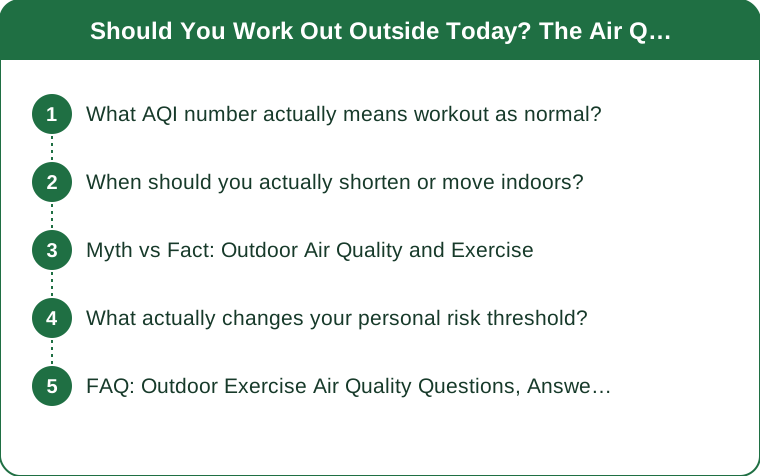
Quick Answer: AQI under 100 is generally fine for outdoor exercise; 100-150 means shorten or lower intensity, especially for sensitive groups; above 150, move the workout indoors. Check the number, don’t just eyeball the sky.
You step outside, the sky looks a little hazy, and you’re stuck guessing whether to run anyway. The sky’s color is a bad guide — the actual AQI number takes 10 seconds to check and removes the guesswork entirely.
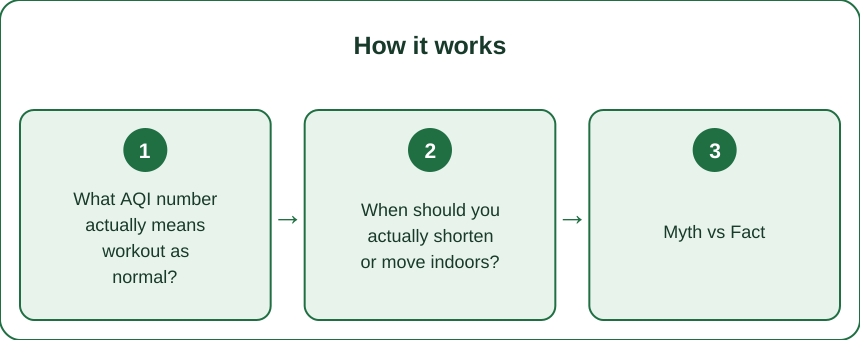
What AQI number actually means workout as normal?
0-50 (Good): no restrictions. 51-100 (Moderate): fine for most people, sensitive groups (asthma, older adults, pregnant) might notice mild effects on longer or harder efforts.
This covers the vast majority of days in most cities — the hazy-looking sky on a Moderate day is usually not a reason to cancel.
When should you actually shorten or move indoors?
101-150 (Unhealthy for Sensitive Groups): general population can still exercise outdoors, but shorten duration and drop intensity — this is the range where a hard interval session becomes an easy jog instead.
151+ (Unhealthy or worse): move outdoor cardio indoors, full stop, especially anything with elevated breathing rate. Pollutant particles get pulled deeper into lungs during hard breathing, which is exactly what a workout produces.
Myth vs Fact: Outdoor Air Quality and Exercise
Myth: If you can’t see or smell anything, the air is fine. Fact: Fine particulate matter (PM2.5), the pollutant most tied to health effects, is often invisible and odorless — checking an app beats checking your nose.
Myth: A mask solves the problem for hard outdoor workouts. Fact: Most cloth and surgical masks don’t filter PM2.5 effectively, and N95s make hard breathing significantly harder — neither is a real fix for a genuinely bad AQI day.
Myth: Morning air is always cleaner. Fact: Ozone (a different pollutant) actually peaks in afternoon heat, while particulate matter from wildfire smoke or inversions can be worst in early morning — check the specific pollutant, not just the time of day.
What actually changes your personal risk threshold?
Asthma, COPD, pregnancy, heart conditions, and age (both kids and 65+) all lower the AQI threshold where outdoor exercise becomes risky — often by 30-50 points compared to a healthy adult.
If you fall into a sensitive group, treat the Moderate (51-100) range with the same caution a healthy adult would give Unhealthy for Sensitive Groups, and check with a doctor about your personal cutoff if you have a respiratory condition.
FAQ: Outdoor Exercise Air Quality Questions, Answered
Where do I check AQI before a workout?
Most weather apps now show it directly, or dedicated air quality apps pull from EPA and local monitoring stations — check right before heading out since AQI shifts through the day.
Is indoor air always safer during a bad AQI day?
Generally yes if windows are closed, though it depends on your home’s filtration. An indoor workout with windows shut is almost always safer than outdoor exercise above 150 AQI.
Does exercise intensity change the safe AQI threshold?
Yes — harder efforts mean deeper, faster breathing, which pulls in more pollutants per minute. Easy movement has a higher safe threshold than hard intervals or sprints.
TL;DR:
- AQI under 100: exercise as normal. 100-150: shorten and ease off. 150+: move indoors
- PM2.5 is often invisible — check an app, not the sky or your nose
- Sensitive groups (asthma, pregnancy, heart conditions, kids, 65+) should lower their threshold
- Harder efforts pull in more pollutants per minute — ease intensity before canceling entirely
This is general guidance, not medical advice — those managing a respiratory condition should get a personal threshold from their doctor.
Keep Reading
This article is for general informational and styling purposes only. Fit, sizing, and product availability may vary.