How to Read Air Quality Before an Outdoor Workout
Quick Answer: The AQI is a single number derived from whichever pollutant is currently worst, so two days at AQI 90 can require completely different responses. In late summer the usual driver is ozone, which peaks in the afternoon on hot sunny days and drops sharply after sunset - so shifting a workout to early morning or evening often solves it entirely. When the driver is fine particulate matter from wildfire smoke, timing helps far less and reducing intensity or moving indoors is the better response.
Check which pollutant, not just the number.

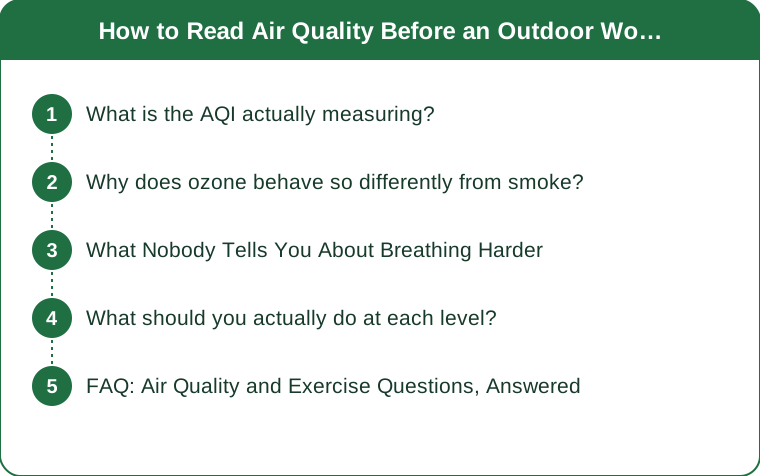
What is the AQI actually measuring?
A composite index that reports the single worst pollutant at that moment, converted to a 0-to-500 scale.
The EPA’s AQI covers five pollutants: ground-level ozone, fine particulate matter (PM2.5), coarse particulate matter (PM10), carbon monoxide, sulfur dioxide, and nitrogen dioxide. Each has its own concentration-to-AQI conversion. The reported AQI is whichever one scores highest.
Which means the number alone is genuinely ambiguous. AQI 90 driven by ozone on a hot afternoon and AQI 90 driven by wildfire smoke are different situations calling for different responses, and most weather apps show only the number.
The categories, for reference:
- 0 to 50, Good. Green. No restrictions.
- 51 to 100, Moderate. Yellow. Unusually sensitive people may want to reduce prolonged intense outdoor exertion.
- 101 to 150, Unhealthy for Sensitive Groups. Orange. People with asthma, heart or lung conditions, older adults, children, and pregnant people should reduce prolonged intense exertion outdoors.
- 151 to 200, Unhealthy. Red. Everyone should reduce prolonged intense outdoor exertion.
- Above 200. Purple and beyond. Move it indoors.
Most apps will show the dominant pollutant if you tap through, and AirNow.gov shows it directly. That extra tap is the whole difference between using the number well and guessing.
Why does ozone behave so differently from smoke?
Because they form differently, and their daily patterns are almost opposite.
Ground-level ozone is not emitted directly. It forms when nitrogen oxides and volatile organic compounds react in sunlight. That reaction needs sun and heat, which means ozone follows a strong daily cycle:
- Low overnight and early morning, since there has been no sunlight to drive formation.
- Rising through the morning as the sun climbs.
- Peaking in mid-to-late afternoon, typically somewhere between 2pm and 6pm.
- Falling sharply after sunset.
This is why ozone is a late-summer problem specifically - hot, sunny, stagnant days are its ideal conditions. And it is why timing is such an effective response. An early morning run on an ozone day may encounter a fraction of the afternoon concentration.
One counterintuitive detail: ozone is often higher in suburbs and downwind rural areas than in city centres, because the precursor chemicals need time and distance to react, and fresh vehicle emissions in dense traffic actually scavenge some ozone. Leaving the city for cleaner air on a hot afternoon can mean running into more ozone, not less.
Fine particulate matter behaves nothing like this. PM2.5 from wildfire smoke is transported in a plume and its concentration depends on wind, not sun. It can be high at any hour, and it can change quickly with a wind shift. Timing does not reliably help, so the response has to be intensity or location instead.
One useful pattern: PM2.5 is often somewhat worse in the early morning in stable atmospheric conditions, because overnight temperature inversions trap particles near the ground. That is the reverse of the ozone rule, which is exactly why knowing the pollutant matters.
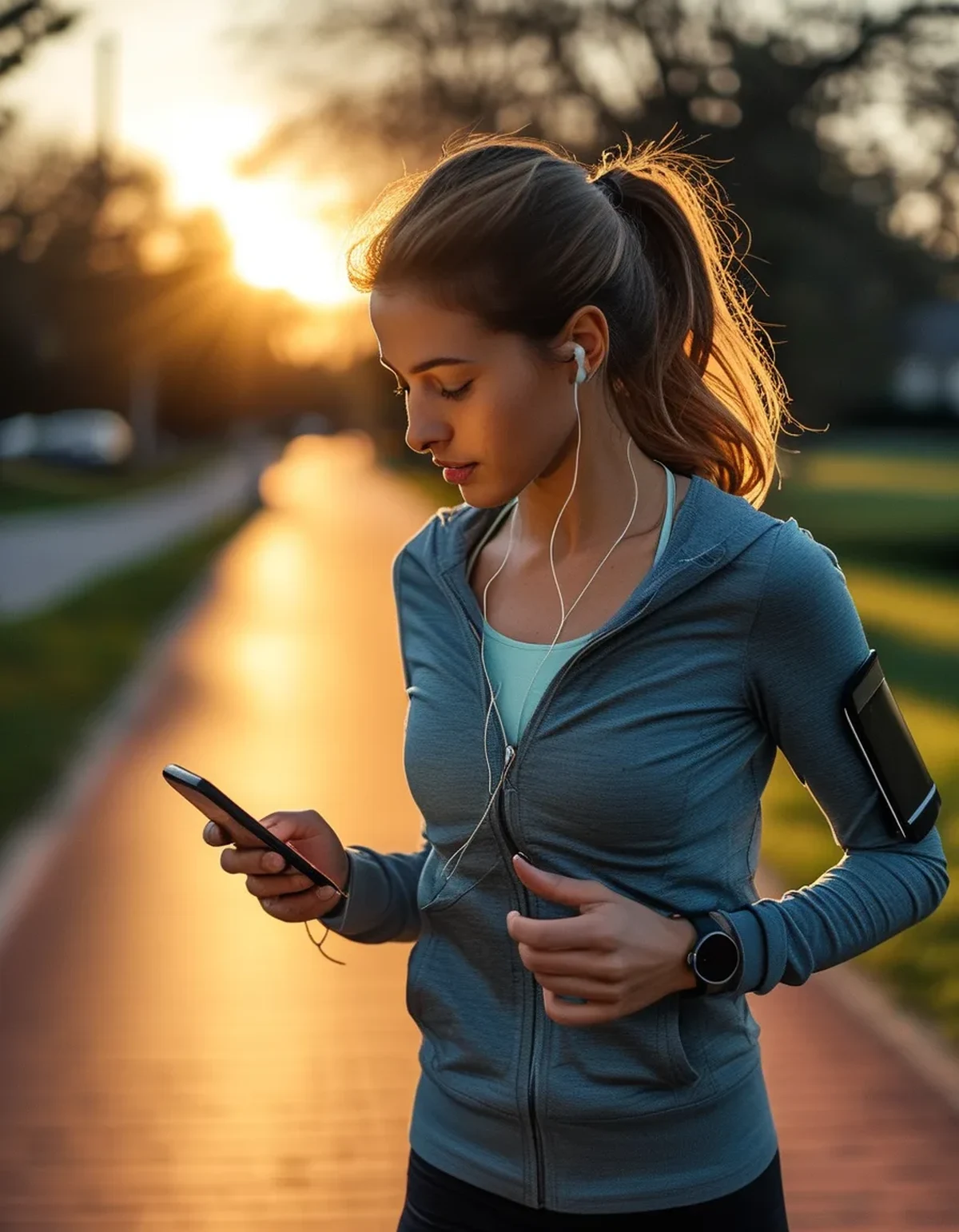
What Nobody Tells You About Breathing Harder
Exercise multiplies your exposure substantially, which is why exercise guidance is stricter than general guidance.
Three things change when you work out:
Ventilation increases dramatically. At rest you move roughly 6 litres of air per minute. During vigorous exercise that can rise to 60 to 150 litres per minute - a tenfold to twentyfold increase. You are inhaling proportionally more of whatever is in the air.
You switch to mouth breathing. The nose is a genuinely effective filter, trapping a meaningful portion of larger particles and some soluble gases. Mouth breathing bypasses it entirely, so more of what you inhale reaches the lower airways.
Deeper breaths carry particles further. Higher tidal volumes push air deeper into the lungs, so particles deposit in the smaller airways and alveoli rather than in the upper airways where they would be cleared more easily.
Combined, the effective exposure during a hard workout can be an order of magnitude higher than standing outside for the same period. This is the whole reason AQI guidance singles out prolonged intense exertion rather than simply being outdoors.
Which gives you a lever that is often better than cancelling: reduce intensity rather than duration. An easy 45-minute walk on a moderate air day involves far less total exposure than a 20-minute hard interval session, because ventilation rate matters more than time. Swapping a threshold run for an easy one is a genuinely effective adjustment, and it is one most people never consider - they think in terms of go or do not go.
What should you actually do at each level?
Practical thresholds for a healthy adult, with the caveat that sensitive groups should step everything down one category.
AQI under 50: train normally.
AQI 51 to 100 (Moderate): train normally if you are healthy. If you have asthma or another respiratory condition, consider moving hard sessions to a better hour, and check whether ozone is the driver - if it is, morning or evening will be substantially better.
AQI 101 to 150 (Unhealthy for Sensitive Groups): healthy adults can still train, but this is the point to move the hard session. Either shift the timing, if ozone is the driver, or reduce the intensity. Sensitive groups should move indoors for anything intense.
AQI 151 to 200 (Unhealthy): everyone should reduce prolonged intense outdoor exertion. Easy activity outdoors is reasonable for healthy adults; intervals and long hard efforts are not. Sensitive groups indoors.
Above 200: indoors, for everyone.
A few practical additions:
- Check the forecast, not just the current reading, since ozone rises predictably through the day and you may be starting at 80 and finishing at 130.
- Avoid busy roads regardless of AQI. Concentrations of traffic pollutants fall off sharply with distance, and moving a route a few hundred metres from a main road makes a substantial difference. This applies on good air days too.
- A standard cloth or surgical mask does very little for PM2.5, and none of it for ozone, which is a gas. An N95 filters particles effectively but makes hard exercise genuinely difficult. It is a reasonable option for a walk, not for a workout.
- Indoor is only better if the indoor air is filtered. A gym with poor ventilation on a smoke day is not necessarily an improvement.
This is general information, not medical advice - anyone with asthma, COPD, or a heart condition should follow their own doctor’s guidance, which will likely be more conservative than the general thresholds above.
FAQ: Air Quality and Exercise Questions, Answered
Is it better to run in the morning or the evening in late summer?
If ozone is the driver - which it usually is on hot, sunny, still days - early morning is clearly best, with evening after sunset second. If wildfire smoke is the driver, morning can actually be worse due to overnight inversions trapping particles. Check the pollutant before deciding.
Does exercising in moderate air pollution cancel out the benefits of exercise?
For most people at moderate levels, no. Research on this question has generally found that the cardiovascular and metabolic benefits of physical activity outweigh the risks of air pollution exposure across most realistic urban conditions. The exception is genuinely high pollution and people with existing respiratory or cardiac conditions, where the balance shifts.
Why do I get a scratchy throat and tight chest on ozone days?
Ozone is a strong oxidant and irritates the airway lining directly. Symptoms including throat irritation, chest tightness, and coughing during deep breaths are common and typically appear during or shortly after exposure. They usually resolve within a day. Repeated exposure is what carries longer-term concern.
Do indoor plants or air purifiers help before a workout?
A HEPA purifier genuinely reduces indoor PM2.5, and is worth having if you train at home during smoke season. Plants do not meaningfully filter indoor air at realistic densities - the studies people cite used sealed chambers, not living rooms. Purifiers also do not remove ozone unless they have a specific carbon filter for it.
TL;DR:
- The AQI reports whichever pollutant is currently worst, so the same number can mean very different things - check the dominant pollutant.
- Ozone peaks in mid-to-late afternoon on hot sunny days and drops after sunset, so shifting the timing usually solves it.
- Wildfire PM2.5 does not follow a daily cycle and can be worse in the early morning due to inversions; reduce intensity instead of retiming.
- Exercise raises ventilation tenfold or more and bypasses nasal filtering, so exposure during a hard session is an order of magnitude higher.
- Reducing intensity is often better than cancelling - an easy 45 minutes involves less exposure than 20 hard ones.
Move your route a few hundred metres off any main road. It helps on good air days too. This is general information, not medical advice.
Keep Reading
This article is for general informational and styling purposes only. Fit, sizing, and product availability may vary.