Exercising Outside in Summer Heat: The Safety-First Performance Guide
Summer outdoor training runs a real physiological gauntlet — and the difference between heat-adapted athletes and heat-illness statistics is protocol, not toughness. The safety-first guide: the warning ladder, the two-week acclimatization and the adjustments that keep sessions outside.

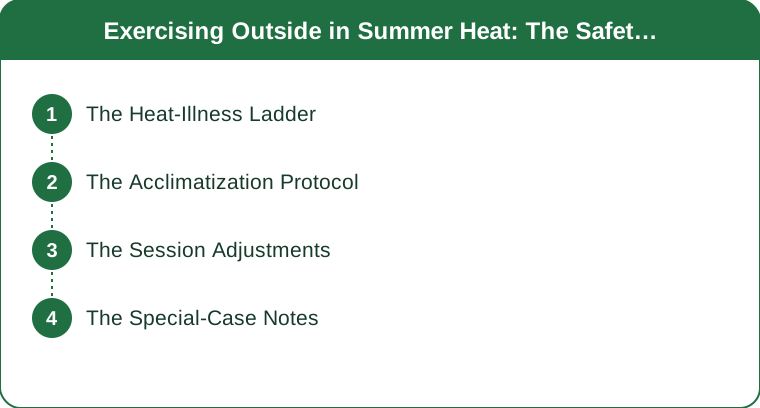
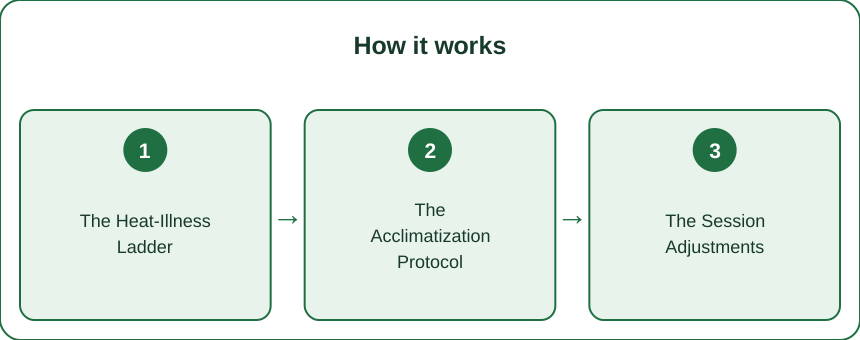
The Heat-Illness Ladder
Know the escalation: heat cramps (the muscle-cramping and heavy-sweat tier — the stop-shade-fluids-salt response), heat exhaustion (heavy sweating with weakness, nausea, headache, dizziness — the STOP tier: shade, fluids, cooling, and the session is over; pushing through this rung is how the next one happens), heat stroke (the emergency — confusion, hot-and-possibly-dry skin, stumbling; the call-for-help-and-cool-aggressively tier, no exceptions), and the self-monitoring honesty (the ladder climbs fast in humidity — the check-in habit every fifteen minutes: how’s the head, the gut, the coordination; heat illness lies to its victims, which is why the buddy system earns its place in hot months).
The Acclimatization Protocol
Building heat fitness: the two-week adaptation (the body genuinely adapts to heat — plasma volume expands, sweating starts earlier and saltier-then-less-salty; the adapted athlete performs and tolerates dramatically better), the ramp structure (week one: short easy sessions in the heat — 20-30 minutes at reduced intensity; week two: gradual duration-then-intensity returns; the vacation-in-a-hot-place and the first-heatwave both deserve this ramp), the maintenance note (adaptation fades in about a week of cool living — the intermittent hot spells each get a mini-ramp), and the who-ramps-longer list (the newer exerciser, some medications, and anyone whose sessions previously lived in AC — the treadmill athlete meeting July is a two-week project).

The Session Adjustments
Training smart in the heat: the schedule lever first (dawn sessions dodge most of the problem — the morning-light protocol and the heat-safety protocol are the same alarm clock; evening second-best), the intensity honesty (heat adds invisible load — the same pace costs more; effort-based training replaces pace-based in summer, and the watch’s numbers get seasonal amnesty), the hydration-and-electrolyte layer (pre-hydrate, sip through, and the sodium math from the electrolyte chapter for the long-hot-salty tier), the route-and-gear intelligence (shade routes, the two-loop-past-the-water-fountain design, light colors, the sport-shades-and-cap kit, and the soaked-cap trick — evaporative cooling worn as a hat), and the swap menu (the red-flag forecast days move sessions to dawn, water, shade or indoors — the quiet-workout and pool chapters are summer’s pressure valves, not defeats).
The Special-Case Notes
The extra-care populations: the humidity multiplier (the heat index outranks the temperature — sweat that can’t evaporate can’t cool; the humid 30°C outdangers the dry 35°C), the cycle-phase note (the luteal phase runs core temperature higher — the cycle-tracking crowd’s summer application; extra margin in week three), the medication-and-condition conversations (several common medications impair heat handling — the pharmacist question worth asking once), and the perspective (summer outdoor training is safe WITH protocol — the dawn crew, the acclimatized, the hydrated train outside all season; the ladder exists so nobody climbs it). Heat respected is heat trained in.
Know the ladder, ramp for two weeks, train at dawn, effort over pace. Summer heat is a training variable with a protocol — respect it and the outdoors stays open.
Keep Reading
This article is for general informational and styling purposes only. Fit, sizing, and product availability may vary.